Wassily Leontief is widely known for his development of an applied approach in economics known as input-output (IO). In this paper, we turn to Leontief’s analysis to reconstruct a concept of technology based on his work. The concept rests upon an analysis of Leontief’s epistemological-methodological assumptions and the premises of his input-output model regarding interdependence. We argue that Leontief’s concept of technology highlights the physical process of technology in two senses: As concrete flows of material stuff used in economic production in the sense of a particular ‘recipe’; but also as emergent systemic effects of that particular ‘recipe’ throughout an economy, or indeed throughout a socio-ecological system. This contrasts with other approaches in the social sciences that understand the materiality of technology largely in terms of objects, artifacts, and infrastructure. We argue that future research could benefit from incorporating Leontief’s approach with work elsewhere in the social sciences. On the one hand, IO depictions of quantitative and systemic effects could be complemented by aspects that are not explicit in Leontief’s framework, including specific social relations such as power, and the role of certain actors or conflicts. On the other, Leontief’s emphasis on physical material aspects and their systemic effects can also link nicely with ecological research, even beyond the now common environmental extensions of the IO model. We argue that such work could yield interesting synergies in the future, not least in the field of ecological economics.
Category:
Publications
On the social implications of technological processes: Towards hybrid social life cycle analysis (H-SLCA)
by BioMat
Carlos López-Morales and Miriam Boyer have published an article in the Journal of Cleaner Production. The paper explores ‘hybrid social life-cycle analysis’ (H-SLCA), an integrated approach combining process-based SLCA with economy-wide social accounting to assess environmental and social impacts of particular technological processes in their interactions with the wider economy. The paper argues that H-SLCA can foster multidisciplinary work on technologies with the qualitative social sciences
Access the paper here: https://www.sciencedirect.com/science/article/pii/S0959652626003458
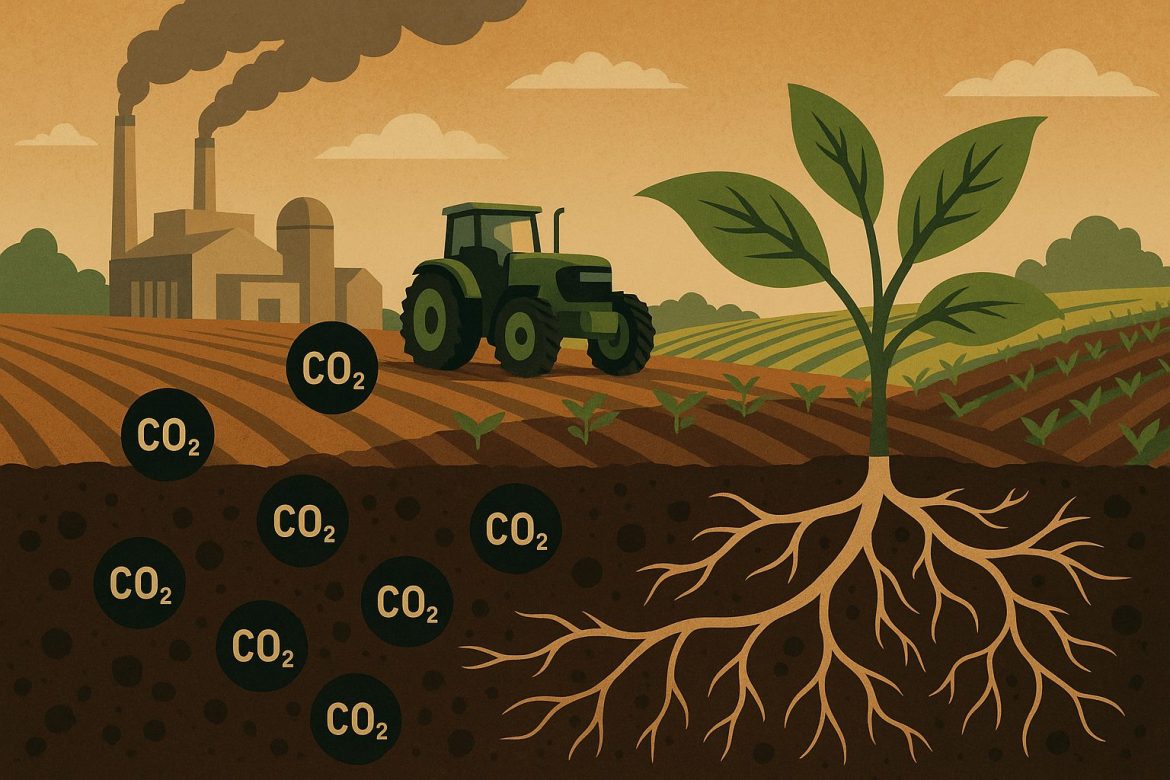
The political economy of carbon farming: Analyzing agribusiness’ accumulation strategy and the imaginary of soil carbon markets
by BioMat
Sarah Hackfort and Tobias Haas have published an article in Environmental Science & Policy.
The full article (open access) can be accessed here: https://www.sciencedirect.com/science/article/pii/S146290112500139X
“Non-extractivist” extractivism: The valorization process of voluntary soil carbon schemes
by BioMat
Johannes Fehrle has published an article in Ecological Economics.
The full article (open access) can be accessed here: https://www.sciencedirect.com/science/article/pii/S0921800925001739
High-tech guardians for the rainforest? How activists in Latin America are taking action against environmental crimes
by BioMat
Sonja Peteranderl, Sarah Hackfort and Miriam Boyer have published an online article in “Blätter für deutsche und internationale Politik”.
The full article (in German) can be accessed here: https://www.blaetter.de/ausgabe/2025/februar/hightech-waechter-fuer-den-regenwald
Dangerous carbon markets: a disastrous decision was taken at the climate conference in Baku
by BioMat
Juliane Schumacher has published an article in ak (“analyse & kritik”).
The full article can be accessed via the following link: https://www.akweb.de/politik/gefaehrliche-kohlenstoffmaerkte-cop29-baku-c02-klimaneutral/
Juliane Schumacher has published an online article for iz3w.
The full article is available in German at the following link: https://www.iz3w.org/artikel/klimakonferenz-cop29-baku-emissionen-handel-wald
For Journalist Magazine, Sonja Peteranderl, Researcher & Journalist in Residence in the Biomaterialities research group, analyzes how journalists tag e-waste, trees or clothing with trackers to prove abuses such as illegal waste disposal or greenwashing. How the technology is used in environmental research – and why it can harm people.
You can read the full report here:
https://www.journalist.de/werkstatt/werkstatt-detail/ein-babystrampler-der-sich-aus-belgrad-meldet/
Digitalization and diversity in agriculture: A greater focus on technologies for small and medium-sized farms
by BioMat
Till Kümmelberger, Sarah Hackfort and Mascha Gugganig have published an article in the newspaper Unabhängige Bauernstimme.
The article is available at the following link: https://www.bauernstimme.de/news/details/digitalisierung-und-diversitaet-in-der-landwirtschaft
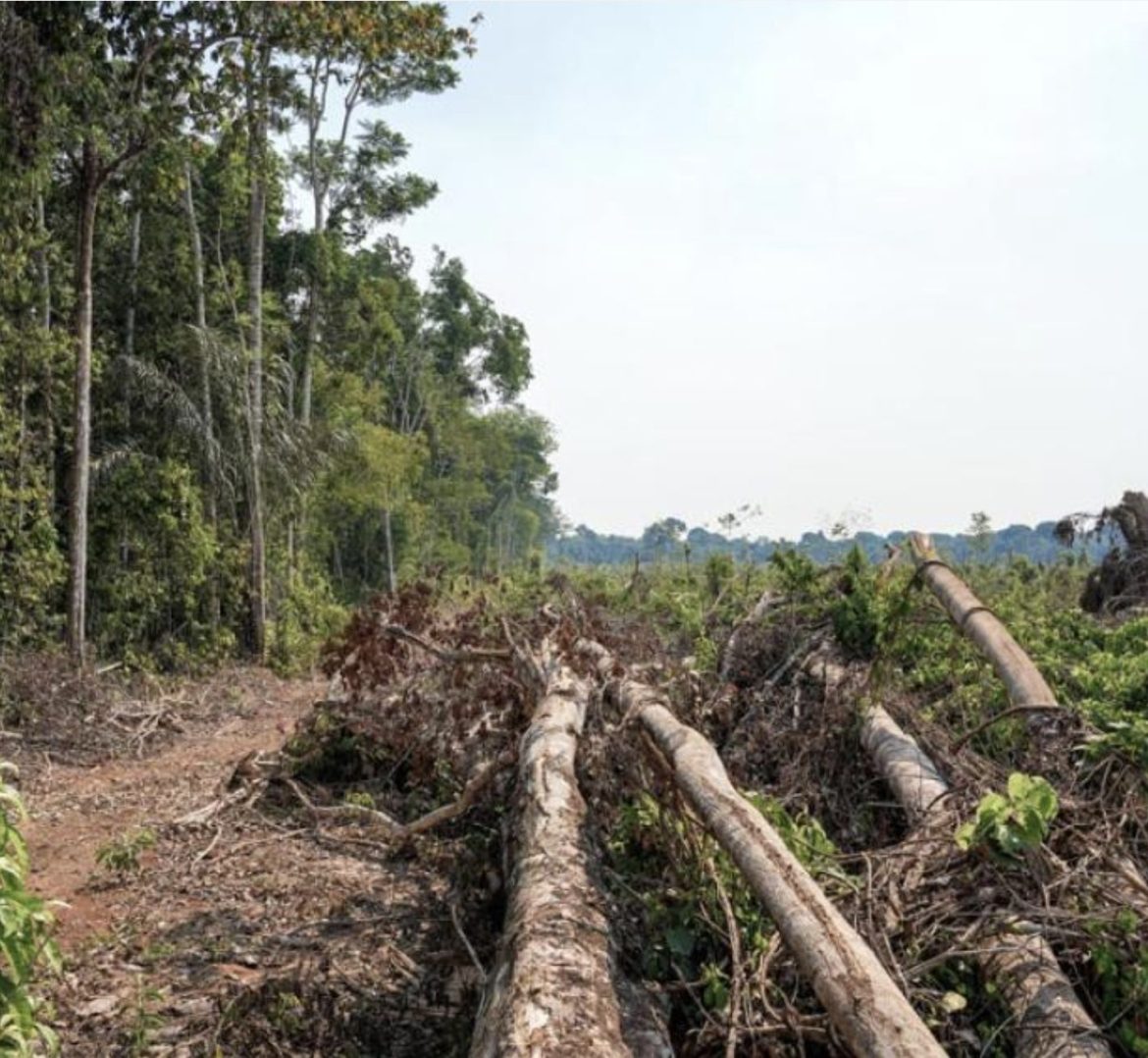
For Journalist Magazine, Sonja Peteranderl, Researcher & Journalist in Residence in the Biomaterialities research group, analyzes how open source intelligence tools (OSINT) such as satellite imagery can help uncover environmental crimes. Companies and governments around the world are destroying nature, and criminal groups are also committing illegal logging, exploitation of raw materials and illegal wildlife trade. Exposing these crimes is more important than ever – and can be life-threatening for journalists, researchers and environmentalists.
Read the full report here (German):
https://www.journalist.de/werkstatt/werkstatt-detail/jagd-auf-umweltverbrecher/