BioMaterialities
  • Projekt
    • Arbeitspakete
    • Wissenschaftlicher Beirat
    • Kooperationspartner
  • Team
  • Publikationen
  • Veranstaltungen
    • Aufzeichnungen
  • Deutsch
    • English
Category:

Events-de

Events-dePublications-de

On the social implications of technological processes: Towards hybrid social life cycle analysis (H-SLCA)

by BioMat Februar 20, 2026

Carlos López-Morales and Miriam Boyer have published an article in the Journal of Cleaner Production. The paper explores ‘hybrid social life-cycle analysis’ (H-SLCA), an integrated approach combining process-based SLCA with economy-wide social accounting to assess environmental and social impacts of particular technological processes in their interactions with the wider economy. The paper argues that H-SLCA can foster multidisciplinary work on technologies with the qualitative social sciences
Access the paper here: https://www.sciencedirect.com/science/article/pii/S0959652626003458


Februar 20, 2026 0 comment
Events-de

Politics, Valorization and Technology in the High-Tech Bioeconomy Closing Event – BioMaterialities Research Group (online)

by BioMat Juni 30, 2025

To conclude the activities of the BioMaterialities research group, we warmly invite you to a one-day online workshop that brings together central themes of our collaborative research: technology, valorization, and politics in the context of the high-tech bioeconomy. In conversation with scholars who have inspired our work, this event offers a space for open, critical reflection on how our group’s research contributes to ongoing debates in political ecology, political economy, and science and technology studies.

The program is structured into three thematic sessions, each featuring two short presentations, a response by a discussant, and an open discussion with participants.

No registration is required. You can join the event directly via Zoom: https://hu-berlin.zoom-x.de/j/64276821368

We look forward to your participation.

Program Overview

13:45–14:00
Welcome and Introduction
Miriam Boyer & Sarah Hackfort
„Technology, Valorization and Politics in the High-Tech Bioeconomy“

Session 1: Politics | Democratic Planning in the Anthropocene

14:00–15:30 CET

This session explores democratic economic planning as a vital response to the polycrises of the Anthropocene. It critically addresses the limitations of market-based bioeconomy strategies and examines how participatory planning might align economic activity with ecological boundaries and social needs.

14:00–14:15
Drew Pendergrass (Duke University)
“Every Cook Can Plan: Economic Democracy Against Catastrophe”

14:15–14:30
Johannes Fehrle (HU Berlin) & Anna Saave (University of Freiburg)
“Feminist and Eco-Marxist Politics for the Democratic Planning Debate”

14:30–14:45
Remarks: Marius Bickhardt (Sciences Po / Centre Marc Bloch)

14:45–15:30
Open discussion

Session 2: Valorization | Financialization, Venture Capital, and Start-Up Economies

16:00–17:30 CET

This session examines how venture capital and broader financial structures shape the high-tech bioeconomy. Focusing on start-ups and their entanglements with corporate and financial actors, the session explores how sustainability is reconfigured through valuation practices—and with what consequences.

16:00–16:15
Sarah Ruth Sippel (University of Münster)
“Techno-finance Fixes: Financializing Agri-Food Through Start-Ups and Venture Capital”

16:15–16:30
Cornelius Heimstädt (HU Berlin)
“Pitching Sustainability: Integrating Environmental Concerns into a Carrier of Venture Capitalization”

16:30–16:45
Remarks: Peter Feindt (HU Berlin)

16:45–17:30
Open discussion

Session 3: Technology | Why and How Should We Engage with the Materiality of Technology?

18:00–19:30 CET

Moving beyond artifact-centered analyses, this session focuses on the materiality of technological processes in economic systems. We explore critical approaches to modeling and interpreting these processes through theories of ecologically unequal exchange and input-output economics.

18:00–18:15
Alf Hornborg (Lund University)
“The Materiality of Trade and Development”

18:15–18:30
Miriam Boyer (HU Berlin) & Carlos López (El Colegio de México)
“Critically Assessing Technological Processes: A Multiscale Approach Using Input-Output Economics”

18:30–18:45
Remarks: Walther Zeug (Helmholtz Centre for Environmental Research, Leipzig)

18:45–19:30
Open discussion

19:30–19:45
Final Wrap-Up

Juni 30, 2025 0 comment
Events-de

Democratic Planning against the Anthropocene Crisis? How Eco-Marxism and Eco-Feminism help us to think about a post-capitalist future

by BioMat März 19, 2025

Johannes Fehrle (HU Berlin) und Anna Saave (Universität Freiburg) werden auf der Konferenz „Marx im Anthropozän: Kapital, Natur, Ökologie, Umwelt“, die vom 11. bis 14. März 2025 in Venedig, Italien, stattfindet, einen Vortrag über demokratische Wirtschaftsplanung gegen die Anthropozän-Krise halten. In ihrem Vortrag werden sie ökomarxistische und ökofeministische Planungsansätze untersuchen.

Abstract:

Technology (Foster and Clarke 2020) and labor (Barca 2019) serve as crucial mediators in the metabolism between human communities and the natural environment. Under capitalism, however, labor and technology mediate society-nature-metabolisms along dominant imaginaries and structures (Pineault 2022) such as fossil capital (Malm 2016), the modern/colonial gender system (Lugones 2007), and ecological modernization (Kern 2019) with outcomes that are both unsustainable and unjust. Moreover, as eco-Marxists and eco-feminists have convincingly shown, capitalism is unable to transform in a way that meets the demands of the socio-ecological transformations necessary to grant a ‚good life‘ to the majority of humans (and non-humans). This would include e.g. slowing down anthropogenic climate change and the ‚anthropocene‘ extinction, decolonization, or a transformation of patriarchal or racial oppression, to name only a few challenges.

In response to the polycrises of the present, the notion of planning has recently seen a revival among radical thinkers (for an overview see Heyer 2024). They argue that a capitalist market system will never be able to truly take into account social and ecological costs and that it is therefore time to think again about a planned economy. To learn from historical mistakes, most thinkers have adapted a model of democratic planning. Building on insights from eco-Marxism, and (Marxist) ecofeminism we explore some of these models and see which insights need to be taken into account from feminist and ecological Marxism when imagining a post-capitalist non-market democratically planned economy.

Weitere Informationen zur Konferenz finden Sie unter: https://www.marxintheanthropocene.com/

März 19, 2025 0 comment
Events-de

Valuing sustainability in technoscientific capitalism (Panel)

by BioMat März 14, 2025

Am 12. März 2025 werden Cornelius Heimstädt (HU Berlin) und Tanja Schneider (Technical University of Denmark) ein Panel auf der STS Hub 2025: Diffracting the Critical Konferenz in Berlin veranstalten. Das Panel findet in Raum 1.505 statt und bringt Wissenschaftler*innen zusammen, um die vielfältigen Weisen zu erkunden, in denen Nachhaltigkeit im technowissenschaftlichen Kapitalismus bewertet wird.

Abstract des Panels:

Chair(s): Cornelius Heimstädt (HU Berlin), Tanja Schneider (Technical University of Denmark)

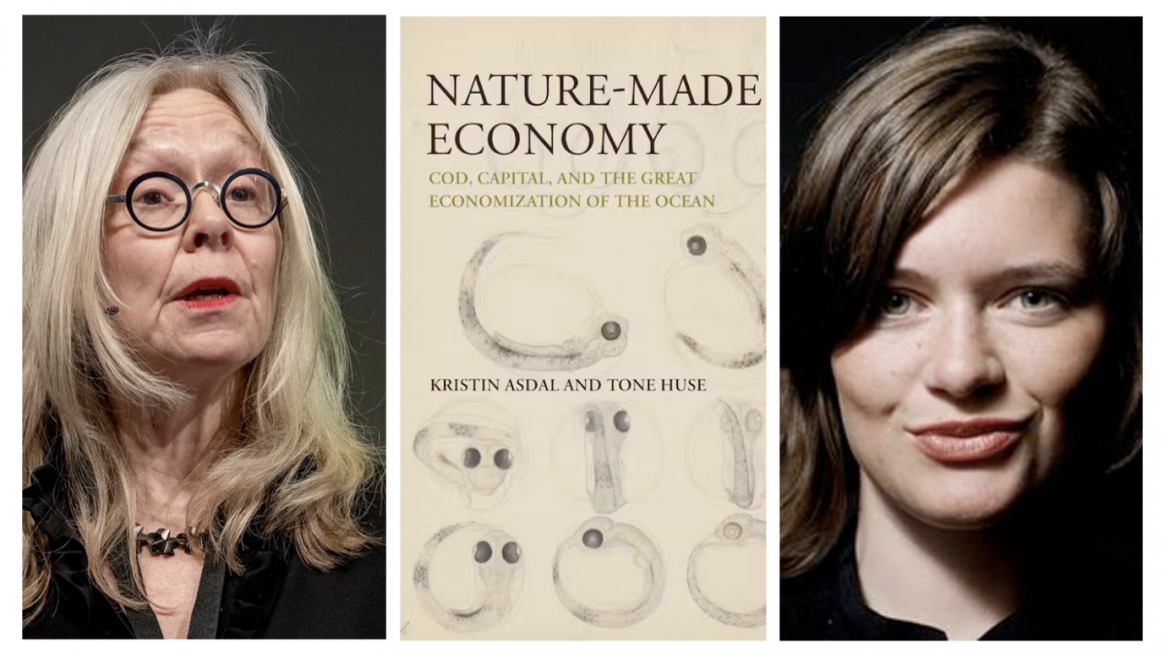
The concept of sustainability is ubiquitous in contemporary economies, yet actors invoke it to describe a wide range of practices and processes—often with divergent, sometimes contradictory, implications. An electric car manufacturer may call his new factory sustainable, despite it being constructed in a water conservation area. A start-up helping polluting industries (e.g. petrochemical, meat, aviation) offset carbon emissions may do so in the name of sustainability. Meanwhile, an organic farmer may cite sustainability to explain the elevated price of her carrots. Inspired by, but not identical to, debates on the valuation of nature (e.g. Fourcade, 2011; Fairbairn, 2021; Asdal & Huse, 2023), this panel invites researchers to investigate the many ways in which sustainability is valued in technoscientific capitalism. The valuation practices (see Helgesson & Muniesa, 2013) we encourage exploring are diverse and may encompass, but are not limited to, re-defining, operationalizing, quantifying, pricing, and contesting sustainability. By analyzing these practices across different industries, our panel aims for a transversal diffraction of the “economized” (Çalışkan & Callon, 2009) sustainability discourses shaping the present—perhaps starting with, but going beyond, the critical reflex of “debunking” (Latour, 2004) them as mere instances of ‘greenwashing’ or similar.

März 14, 2025 0 comment
Events-de

Call for Papers: Valuing Sustainability in Technoscientific Capitalism

by BioMat Januar 24, 2025

We are pleased to announce the call for papers for the forthcoming special issue of Valuation Studies entitled „Valuing Sustainability in Technoscientific Capitalism“, edited by Cornelius Heimstädt (Humboldt University Berlin) and Tanja Schneider (Technical University of Denmark).

Interested contributors are invited to submit an extended abstract (approx. 1,000 words) by March 31, 2025. Selected authors will then submit full papers for peer review by October 1, 2025.

For details, including guiding questions and submission instructions, visit the full call for papers: https://valuationstudies.liu.se/valuing_sustainibility

Januar 24, 2025 0 comment
Events-de

Digitalisierung für Agrarökologie – Grün und digital – ein perfektes Paar? (Paneldiskussion)

by BioMat Januar 24, 2025

Die Digitalisierung wird als zentraler Treiber für eine moderne und nachhaltige Landwirtschaft betrachtet. Technologien wie georeferenzierte Landwirtschaft mit teilflächenspezifischen Anwendungen, Robotik und künstliche Intelligenz prägen zunehmend die Entwicklung der Branche. Doch wie lassen sich damit die Ziele der Agrarökologie erreichen? Welche Rahmenbedingungen sind erforderlich, um positive Effekte zu fördern und mögliche negative Auswirkungen zu minimieren?

Im Zuge der Grünen Woche 2025 hat Cornelius Heimstädt gemeinsam mit anderen Teilnehmer*innen aus Wissenschaft, Industrie und Politik an einer Podiumsdiskussion zur obigen Fragestellung mit besonderem Fokus auf die Rolle von Innovation und Start-Ups als mögliche Treiber eines solchen Prozesses teilgenommen.

Die Einladung zur Podiumsdiskussion und die Organisation der Veranstaltung erfolgte durch das Horizon Europe Projekt D4AgEcol.

Januar 24, 2025 0 comment
Events-de

(DE)AUTOMATING THE FUTURE: MARXIST PERSPECTIVES ON CAPITALISM AND TECHNOLOGY (BUCHVORSTELLUNG)

by BioMat Januar 24, 2025

Much has been written about the prospects of automation in recent years. While many have raised concerns over the threat of technological mass unemployment, others have anticipated a fully automated communist utopia which will provide material abundance to everyone. (De)Automating the Future (Brill 2024) gathers chapters that critically investigate automation’s ambivalences from inter-disciplinary Marxist perspectives. The contributions raise questions about automation’s affordances for postcapitalism, its transformation of manual and mental labour, and its role in the intensification of class antagonisms and exploitation.

The book launch will gather the editors and most of the contributors in an online roundtable to provide an overview of their collective work and discuss the challenges and possibilities of technological change while providing the audience a chance to join in on the conversation about the ambivalences of automation and technological change.

You can find a video recording of the event here: https://www.youtube.com/watch?v=AzLc2SuRJes

Januar 24, 2025 0 comment
Events-de

Designing Paths to Postcapitalism? Rethinking Technology and Labor as Mediators for Societal Transformation

by BioMat November 22, 2024

Johannes Fehrle und Anna Saave haben auf der 21. jährlichen Londoner Konferenz zum historischen Materialismus 2024 einen Artikel vorgestellt.

Abstract des Artikels:

Technology (Foster and Clarke 2020) and labor (Barca 2019) serve as crucial mediators in the metabolism between human communities and the natural environment. To date, labor and technology mediate society-nature-metabolisms (Pineault 2022, Becker/Jahn 2006) along dominant imaginaries and structures, such as fossil capital (Malm 2016), the modern/colonial gender system (Lugones 2007), and ecological modernization (Kern 2019) – with outcomes that are both unsustainable and unjust. In response, we not only examine the pivotal roles of technology and labor in shaping the societal relations with nature, but also ask how these mediators can be influenced in ways that will lead to more sustainable and equitable futures: (How) can we use design and planning in order to transform societal relations to nature? Our focus lies on exploring mechanisms for steering these mediators towards enabling more sustainable and equitable socio-economic systems. We will pay particular attention to technological innovation processes, environmental and spatial planning, and new approaches to work. The overarching question is: Has ‘sustainability by design’ become possible through changes in the mediating functions of technology and labor?

To answer this question we will examine if and how we can achieve such transformative designs. While technological innovation has long been hailed as the primary driver of change, by e.g. ecomodernists, we ask in how far we can steer technological innovation towards sustainable ends within the current political economic regime. Similarly, class struggles and demographic shifts have historically shaped labor relations. But how believable are promises of deliberate planning for new forms of work in order to foster greater sustainability and social justice? Synthesizing discussions about labor and technology in light of the current political economic regime and its hold on these mediators is crucial when beginning to trace pathways towards postcapitalist futures.

November 22, 2024 0 comment
Events-de

Carbon Offsetting as a Green Capitalist Business Venture

by BioMat November 21, 2024

Am 30. November wird Johannes Fehrle auf der Konferenz „Green Capitalism – A New Regime of Accumulation?“ in Berlin einen Artikel vorstellen.

Abstract des Artikels:

In recent decades the multiple ecological crises of capitalism have become so apparent that even bourgeois states and capitalist shareholders have accepted that something needs to be done to stop catastrophes such as climate change. At the same time calls for radical socio-ecological transformations, such as Kohei Saito’s “degrowth communism” (2022), remain relatively marginal. Instead, the dominant factions of society have resorted, once again, to a reliance on technofixes in the hopes that technology can “infinitely expand commodity production and capital accumulation”, willfully overlooking both that many of these future technologies are at best marginally developed, as well as the “immense, unforeseen repercussions” such technologies and the continuation of the current mode of production bring with them (Foster and Clark 2020: 284). My talk will examine one such technofix: carbon offsetting, particularly offsetting from agriculture (‘carbon farming’). Employing Elmar Altvater and Birgit Mahnkopf’s model of ‘valorization’ [Inwertsetzung] (Altvater 1987; Altvater & Mahnkopf 2007), I will shed light on the political economy of this new process of extracting value from a previously unvalorized aspect of nature. Drawing on literature about the scientific promises as well as the many uncertainties surrounding the measurement, verification, and long-term benefits of carbon farming, all of which are still controversially discussed in the literature, I understand carbon farming as a new green capitalist business venture. Far from fretting over the supposed accumulation crisis of a “second contradiction” of capitalism (O’Connor 1988), capital understands ecological crises as a source for new business ventures and new forms of extraction. I will term these “‘non-extractive’ extractivism”, since they extract value precisely through the non-extraction of the commodity they supposedly sell: soil organic carbon. What is more, carbon farming does not replace the extraction of commodities from farmland, but adds the ‘production’ of symbolic claims for carbon dioxide removal to the economic portfolio of agro-food businesses. As such it stands as an example of how capitalism tries to adapt to and reap profits from the ecological problems it has been instrumental in creating.

November 21, 2024 0 comment
Events-de

A Critical Assessment of the ‘Real Subsumption of Nature’ Argument

by BioMat November 21, 2024

Am 29. November wird Miriam Boyer auf der Konferenz „Green Capitalism – A New Regime of Accumulation?“ in Berlin
einen Artikel vorstellen.

Abstract des Artikels:

An increasingly popular analysis of the relationship between society, nature and technology argues that the application of technologies in natural systems amounts to a ‘real subsumption of nature.’ The argument is analogous to Marx’s distinction between a real/formal subsumption of the labour process under capital. A foundational contribution argued that biotechnologies in the forestry industry could harness nature to “work harder, faster and better” (Boyd 2001, 564). According to this argument, technological interventions constitute a “real,” vis-àvis a “formal” subsumption of nature in the case of non-biologically-based industries (ibid.). In the wake of various ‘green’ capitalist projects, scholarly papers making this argument have multiplied. Moreover, Eco-marxist authors have more recently also used the argument to advance the idea of a ‘working’ nature and to question the distinction between nature and society. The contribution takes a critical stance vis-à-vis the ‘subsumption of nature’ thesis. Taking the example of high-tech plant breeding, it suggests that the notion of a formal/real subsumption of nature does not help to better understand the relationship between society, nature and technology. Just the opposite, it avoids specifying just how technologies associated with green capitalist projects harness and interact with nature. Moreover, the argument is problematic as a theoretical proposition that erases emergent properties that distinguish social relations from nature. Rather than a useful tool for understanding technological transformations in green capitalist projects, the ‘Real Subsumption of Nature’ argument contributes to the ideological basis of green capitalist projects.

November 21, 2024 0 comment
  • 1
  • 2
  • 3
  • …
  • 8

Recent Posts

  • On the social implications of technological processes: Towards hybrid social life cycle analysis (H-SLCA)

    Februar 20, 2026
  • The political economy of carbon farming: Analyzing agribusiness‘ accumulation strategy and the imaginary of soil carbon markets

    Juli 1, 2025
  • “Non-extractivist” extractivism:The valorization process of voluntary soil carbon schemes

    Juni 12, 2025
  • Hightech-Wächter für den Regenwald? Wie Aktivisten in Lateinamerika gegen Umweltverbrechen vorgehen

    Februar 12, 2025

Events

There are no events

BIOMATERIALITIES – Agricultural and Food Policy Group, Department of Agricultural Economics, Faculty of Life Sciences, Humboldt-Universität zu Berlin, Germany

  • Haftungsbeschränkung
  • Datenschutzbestimmung
  • Kontakt

@2019 | BioMaterialities

BioMaterialities
  • Projekt
    • Arbeitspakete
    • Wissenschaftlicher Beirat
    • Kooperationspartner
  • Team
  • Publikationen
  • Veranstaltungen
    • Aufzeichnungen
  • Deutsch
    • English